

Short answer
The EU AI Act imposes light obligations on most industrial quality inspection. A model that grades welds or surfaces is usually not high-risk: AI used solely for non-safety related aspects of quality control is not a safety component unless its failure would endanger health and safety, and quality grading is not in Annex III. Prohibitions and AI literacy already apply; machine safety functions and worker monitoring can be high-risk.
Key takeaways
- The AI Act defines an AI system broadly, so a trained model that infers a pass, fail or severity grade from sensor data almost certainly counts.
- High-risk status comes from two routes: safety components of products under Annex I legislation that need third-party assessment, and the use cases listed in Annex III.
- Inspection AI that judges product quality is usually outside both routes, and Article 6(1a), added in 2026, states that AI used solely for non-safety related aspects of quality control is not a safety component, while Article 6(1b) keeps AI whose failure would endanger health and safety in scope; AI that monitors and evaluates workers, or performs a safety function on a machine, may still be high-risk.
- Since 2 February 2025, the prohibitions and the AI literacy obligation apply, including the ban on emotion recognition in the workplace; the literacy duty was reworded in July 2026.
- After the Digital Omnibus on AI, Regulation (EU) 2026/1744 (in force since 27 July 2026), Annex III high-risk rules apply from 2 December 2027 and Annex I product rules from 2 August 2028.
The EU AI Act and industrial quality inspection meet in almost every factory that uses machine vision, acoustic checks or sensor-based weld monitoring. The question we hear most is simple: "Is our inspection AI high-risk?" For most systems the answer is no. But "not high-risk" is not the same as "not covered", and the edge cases are worth understanding.
This article explains how to classify an inspection system under Regulation (EU) 2024/1689, which obligations already apply, and what the timeline looks like after the Act was amended by the Digital Omnibus on AI in July 2026. It is written for engineers and quality managers, not lawyers.
Is your inspection model an "AI system"?
Almost certainly yes. Article 3(1) of the AI Act defines an AI system as a machine-based system that is designed to operate with varying levels of autonomy, may exhibit adaptiveness after deployment, and infers from its input how to generate outputs such as predictions, content, recommendations or decisions that can influence physical or virtual environments.
A convolutional network that labels weld images, an anomaly detector on vibro-acoustic signals, or a gradient-boosted classifier that assigns a severity grade all infer outputs from input data. A fixed threshold on a single measured value, written by an engineer, is a different matter, but most modern inspection systems go well beyond that.
The more useful question is which risk category the system falls into, because that determines the obligations.
The four risk tiers in brief
The AI Act sorts AI systems into four groups:
- Prohibited practices (Article 5), such as social scoring or emotion recognition in the workplace.
- High-risk systems (Article 6), which carry most of the obligations: risk management, data governance, technical documentation, logging, human oversight, accuracy and robustness, and conformity assessment.
- Systems with transparency obligations (Article 50), such as chatbots and generated content.
- Everything else, which has no specific obligations beyond general ones such as AI literacy.
Most industrial inspection lands in the last group. The work is in confirming that it does not land in the second.
When industrial inspection AI becomes high-risk
Article 6 gives two routes to high-risk status.
Route 1: safety component of a regulated product
Under Article 6(1), an AI system is high-risk if both conditions hold:
- It is intended to be used as a safety component of a product, or is itself a product, covered by the Union harmonisation legislation listed in Annex I.
- That product must undergo a third-party conformity assessment under that legislation.
Annex I lists the product legislation concerned, such as the rules on lifts, pressure equipment, radio equipment and toys. Since the Digital Omnibus on AI, machinery has moved from Section A of Annex I, which listed the Machinery Directive 2006/42/EC, to Section B, which now lists the Machinery Regulation (EU) 2023/1230. An AI safety component of machinery that needs third-party assessment is still classified as high-risk under Article 6(1), but for Section B products only Article 6(1), Article 60a and Articles 102 to 112 of the AI Act apply directly. The detailed requirements will be written into the Machinery Regulation through delegated acts that must apply by 2 August 2028.
The Omnibus also sharpened the definition of a safety component. Article 3(14) now says a component fulfils a safety function where its intended purpose is to prevent or mitigate risks to the health and safety of persons or property, and the new Article 6(1a) states that AI systems used solely for non-safety aspects of user assistance, performance optimisation, service efficiency, automation, convenience or quality control do not qualify as safety components. Article 6(1b) adds the counterweight: an AI system whose failure or malfunctioning would endanger health and safety does qualify.
Apply that to a typical inspection cell. A camera and model that reject defective battery welds protect product quality. They do not protect the operator from the machine. In most cases the inspection AI is therefore not a safety component, and Route 1 does not apply; check Article 6(1b) if a missed defect could itself endanger health and safety.
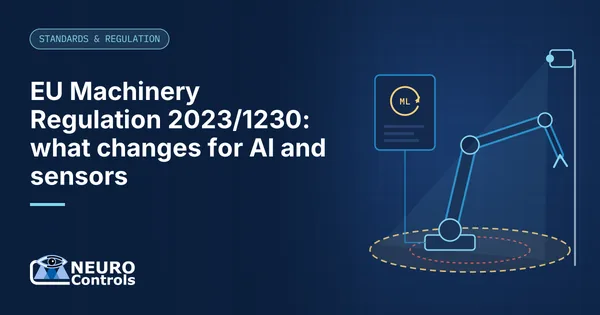
It changes if the same AI performs a safety function: for example, a vision model that detects a person in a hazardous zone and stops a robot. Then it may be a safety component of machinery, and whether third-party assessment is required becomes the deciding question. Our article on the EU Machinery Regulation 2023/1230 explains how the machinery rules treat machine-learning safety components.
Route 2: the Annex III use cases
Under Article 6(2), systems used in the areas listed in Annex III are high-risk. Two entries matter for factories:
- Critical infrastructure: AI intended as a safety component in the management and operation of critical digital infrastructure, road traffic, or the supply of water, gas, heating or electricity. Inspection in a component factory is rarely this; process safety monitoring in a utility might be.
- Employment and workers management: AI intended to make decisions affecting work relationships, allocate tasks based on individual behaviour or traits, or monitor and evaluate the performance and behaviour of persons in work relationships.
The second entry is the one to watch. A camera system that inspects parts is not worker monitoring. The same camera data, used to rate how carefully individual operators work, may be. Article 6(3) offers a derogation for Annex III systems that perform narrow procedural or preparatory tasks without materially influencing decisions, but it never applies when the system profiles natural persons, and the provider must document the assessment.
Classification at a glance
| Inspection scenario | Likely classification | Why |
|---|---|---|
| Vision or acoustic model grading weld or surface quality | Not high-risk | Used solely for non-safety related aspects of quality control, so normally not a safety component (Article 6(1a)), unless its failure would endanger health and safety (Article 6(1b)); not in Annex III |
| Anomaly detection on machine vibration for maintenance | Not high-risk | Advisory, no safety function, not in Annex III |
| AI that stops a machine when a person enters a danger zone | Possibly high-risk under Article 6(1) | Safety component of machinery; depends on third-party assessment; requirements to come through the Machinery Regulation by 2 August 2028 |
| Camera analytics rating individual operators' performance | Likely high-risk via Annex III | Monitoring and evaluating workers |
| Inferring operators' emotions from video or voice | Prohibited | Article 5 workplace emotion recognition ban |
The table is a starting point for your own assessment, not a substitute for it. The intended purpose you document drives the result.
What already applies to inspection AI
Two sets of rules have applied since 2 February 2025, regardless of risk tier.
The prohibitions. Article 5 bans, among other practices, AI systems that infer the emotions of a natural person in the workplace, except for medical or safety reasons. If your vision system also watches operators, make sure no "fatigue" or "mood" feature crosses that line.
AI literacy. Article 4, as replaced by Regulation (EU) 2026/1744, requires providers and deployers to take measures to support the development of AI literacy among their staff and others dealing with the operation and use of AI systems on their behalf, taking into account their technical knowledge, experience, education and training and the context of use. The obligation does not require any specific level of AI literacy to be guaranteed for any individual, and the Commission is to publish practical examples of how to comply. For a quality team this still means operators and engineers who understand what the model was trained on, what its output means, when to override it and how to report doubtful results.
The AI Act timeline after the Digital Omnibus
Article 113 sets the dates. With the amendments made by Regulation (EU) 2026/1744, the dates that matter for inspection AI are:
| Date | What applies |
|---|---|
| 1 August 2024 | Entry into force |
| 2 February 2025 | Chapters I and II: general provisions, AI literacy, prohibited practices |
| 2 August 2025 | Notified bodies, general-purpose AI models, governance, penalties |
| 27 July 2026 | Regulation (EU) 2026/1744 (Digital Omnibus on AI) enters into force, including the new Article 4 wording and the narrower safety component definition |
| 2 August 2026 | General date of application, for example for the transparency obligations of Article 50; high-risk rules no longer start on this date |
| 2 December 2027 | High-risk systems under Article 6(2) and Annex III |
| 2 August 2028 | High-risk systems under Article 6(1) and Annex I; for machinery, the AI requirements arrive through Machinery Regulation delegated acts that must apply by this date |
What the Digital Omnibus on AI changed
On 19 November 2025 the Commission proposed a Digital Omnibus on AI, COM(2025) 836. The proposal would have linked the start of the high-risk rules to the availability of harmonised standards and other support measures, with long-stop dates of 2 December 2027 for Annex III and 2 August 2028 for Annex I.
The adopted text, Regulation (EU) 2026/1744 of 8 July 2026, was published in the Official Journal on 24 July 2026 and entered into force on 27 July 2026. It sets fixed dates instead: the high-risk rules apply from 2 December 2027 for systems classified under Article 6(2) and Annex III, and from 2 August 2028 for systems classified under Article 6(1) and Annex I. For inspection teams, four changes matter:
- Fixed high-risk dates replace the original 2 August 2026 and 2 August 2027.
- Machinery moves to Section B of Annex I, so AI requirements for machine safety components come through the Machinery Regulation rather than directly from the AI Act.
- A narrower safety component definition, with the explicit statement that AI used solely for non-safety related aspects of quality control is not a safety component, unless its failure would endanger health and safety.
- A reworded AI literacy duty: providers and deployers must take measures to support AI literacy, without having to guarantee a specific level.
The existing prohibitions, including the workplace emotion recognition ban, were not relaxed; the Omnibus added two new ones on AI-generated sexual imagery, which apply from 2 December 2026. Plan to the amended dates, and keep the documentation you would need if a system ever moves into a high-risk role.
A practical checklist for quality and engineering teams
- Inventory your AI. List every model in inspection, testing and monitoring, with supplier, intended purpose and where its output goes.
- Write down the intended purpose. Classification follows from it. "Grades weld seams for quality release" is different from "stops the line to protect operators".
- Check Route 1. Does the AI perform a safety function on a product under Annex I legislation that requires third-party assessment? For machinery, follow the Machinery Regulation delegated acts.
- Check Route 2. Does any output evaluate people, allocate tasks to them or affect their employment?
- Check the prohibitions. Remove any emotion inference about staff.
- Organise AI literacy. Train operators and engineers on what the model does and does not do, and keep a record.
- Document anyway. Even for non-high-risk systems, keep model versions, training data descriptions and validation results. You will need them for quality audits, customer questions and the machinery rules.
Good documentation is also good engineering. Our article on validating industrial AI models shows why a model that scores well in the lab can still fail on the line.
How NeuroControls approaches this
Our inspection and monitoring models are trained by our engineers on customer data for a defined purpose, such as feature extraction, anomaly detection, fault classification or severity grading. That gives each model a clear intended purpose and an identifiable version, which is the starting point for any AI Act classification. Our models grade and report; they never act on the controller, an interlock or a safety function. Our model approach explains the steps from data to deployed model.
Our recording software keeps a versioned manifest, per-segment SHA-256 hashes and an append-only journal, so the data behind a model and its results can be traced. For weld inspection in battery production, see our battery industry page; for edge deployment in general, our edge AI solutions. For background on where these models run, read what edge AI in manufacturing is.
Frequently asked questions
Is AI-based visual quality inspection high-risk under the EU AI Act?
Usually not. An AI system that grades product quality, such as weld seams or surface defects, is not one of the Annex III use cases, and Article 6(1a), added by Regulation (EU) 2026/1744, states that AI used solely for non-safety related aspects of quality control does not qualify as a safety component; under Article 6(1b), AI whose failure would endanger health and safety still does. It becomes a different question if the system performs a machine safety function, or if its output is used to monitor and evaluate individual workers.
When do the EU AI Act high-risk rules apply?
Regulation (EU) 2026/1744, the Digital Omnibus on AI, amended Article 113 with effect from 27 July 2026. High-risk rules for Annex III use cases now apply from 2 December 2027, and rules for AI classified as high-risk under Article 6(1), the Annex I product route, from 2 August 2028. For machinery, the requirements reach products through Machinery Regulation delegated acts that must apply by 2 August 2028.
What is the AI literacy obligation in the AI Act?
Article 4, as replaced by Regulation (EU) 2026/1744, requires providers and deployers to take measures to support the development of AI literacy among staff and others operating AI on their behalf, taking into account their knowledge and the context of use. It does not require any specific level of literacy to be guaranteed, and the Commission is to publish practical examples. In practice, people who rely on an inspection model should understand its purpose, limits and outputs, and know when to override it.
Does the AI Act apply to predictive maintenance and condition monitoring AI?
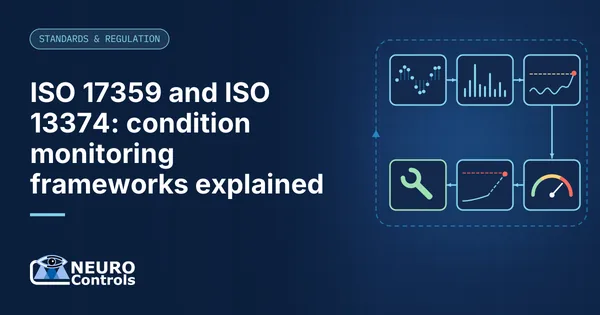
Yes, in the sense that such models are AI systems, but they are rarely high-risk. A model that detects anomalies or grades faults on machines for maintenance planning is advisory and not listed in Annex III. If the same model directly triggers a safety function, such as an emergency stop, check whether it is a safety component under machinery legislation.
Can cameras in a factory fall under the AI Act's prohibitions?
Yes, if they are used to infer the emotions of workers. Since 2 February 2025, Article 5 prohibits AI systems that infer emotions of natural persons in the workplace, except for medical or safety reasons. Using cameras to inspect parts is not affected, but adding features that assess operators' mood or stress could be.
Sources and further reading
- Regulation (EU) 2026/1744 of 8 July 2026 (Digital Omnibus on AI), Official Journal L, 24.7.2026
- Regulation (EU) 2024/1689 (Artificial Intelligence Act), EUR-Lex
- European Commission: Digital Omnibus on AI regulation proposal (19 November 2025, with entry-into-force notice of 27 July 2026)
- Council of the EU document 15708/25: COM(2025) 836 final, Digital Omnibus on AI (proposal, superseded by Regulation (EU) 2026/1744)
- Cooley: EU AI Act proposed Digital Omnibus on AI (November 2025, on the proposal)