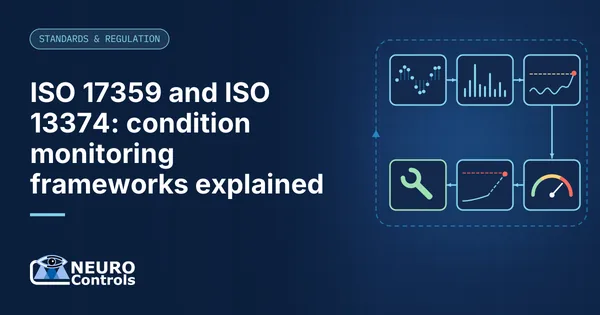
ISO 17359 and ISO 13374: condition monitoring frameworks explained
ISO 17359 tells you how to set up a condition monitoring programme; ISO 13374 tells you how to structure the data processing behind it. Both explained, with current editions.

21 articles
ISO 17359 tells you how to set up a condition monitoring programme; ISO 13374 tells you how to structure the data processing behind it. Both explained, with current editions.
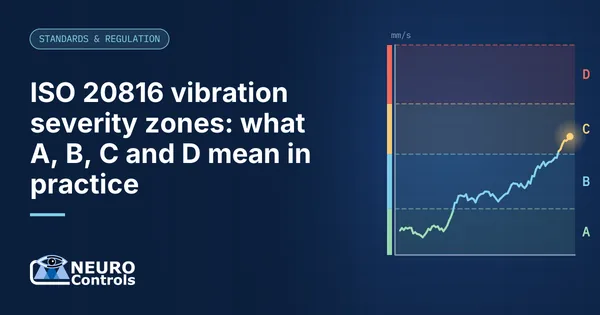
Zones A to D in ISO 20816 tell you how a machine's broadband vibration compares with experience. Here is what each zone means, how to set alarms and trips, and what the zones cannot tell you.
The EU Data Act gives users of connected machines rights to the data they generate. What it covers, what it means for industrial AI, and the dates that matter.
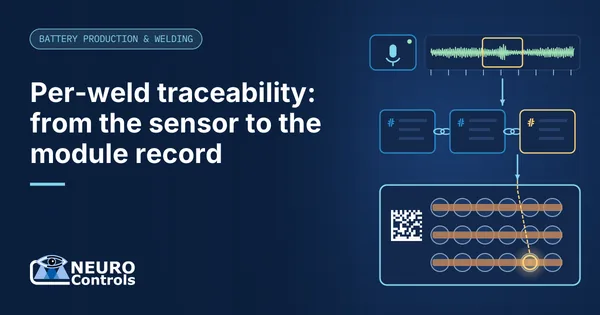
A weld grade is only useful if you can find it again and prove where it came from. How to build the chain from sensor sample to module record, step by step.
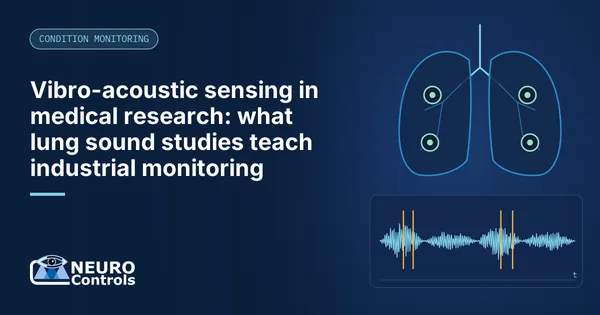
What lung sound research teaches about vibro-acoustic sensing, with our TeMeLu lung monitor project as context: coupling, noise, labels, validation and the boundary with medical device rules.
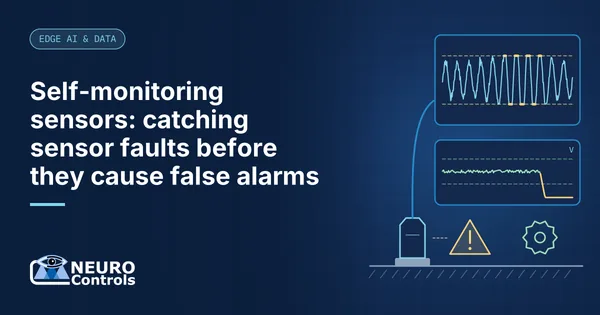
A loose accelerometer looks like a machine fault to a model. How self-monitoring sensors detect their own faults and keep them out of the fault statistics.
Raw vibration, sound and thermal data quickly outgrow any uplink. A practical comparison of edge and cloud evaluation, with numbers, regulations and a decision table.
Forty terms that come up when mechanical engineers, electronics designers and data scientists build multimodal sensing systems together, each defined in one to three sentences.
How tool wear and chatter appear in spindle vibration, sound and load, why context from the NC program matters, and a practical set-up procedure for machine tools.
The keyhole and melt pool of a laser weld make sound. What airborne microphones and acoustic emission sensors pick up, what peer-reviewed studies show, and where the method stops.
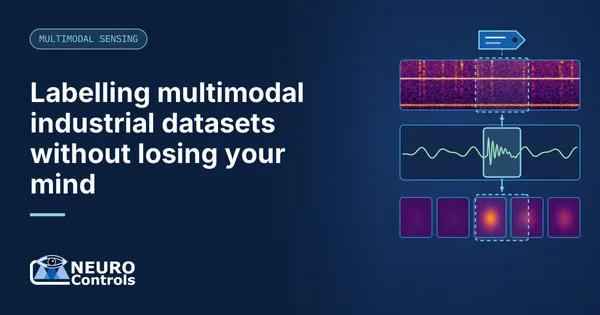
A practical workflow for labelling vibration, sound, video and thermal data together: label schemes, label propagation with time uncertainty, weak labels and quality checks.
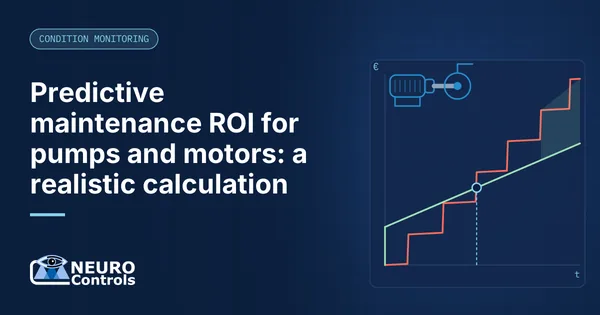
A step-by-step predictive maintenance ROI calculation for pumps and motors, with an illustrative worked example, sensitivity analysis and the inputs that matter.
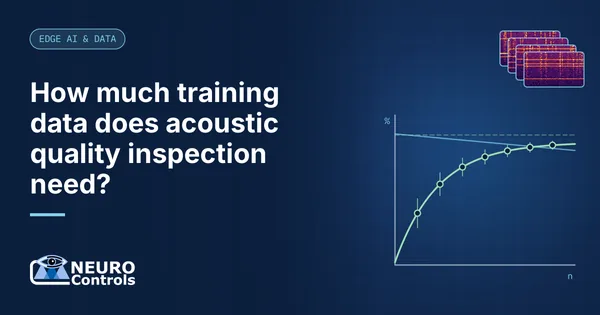
There is no magic number of recordings. What really sets the amount of training data for acoustic inspection, and how to estimate it from a small pilot campaign.
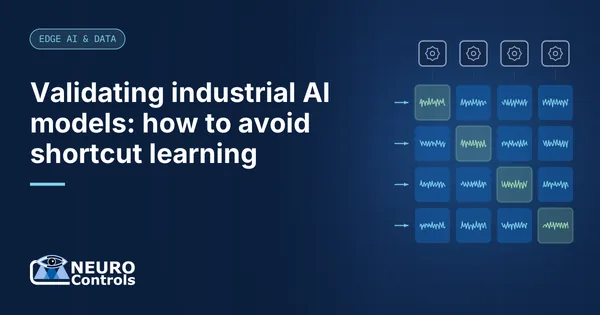
A model can score near 100 % and still have learned nothing useful. How shortcut learning creeps into industrial data and how to design a validation that catches it.
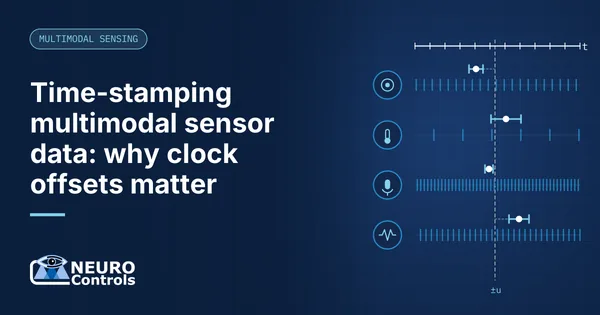
Every sensor has its own oscillator, and they all disagree. How clock offset and drift arise, how to measure them and what a recording should store so data can be aligned later.
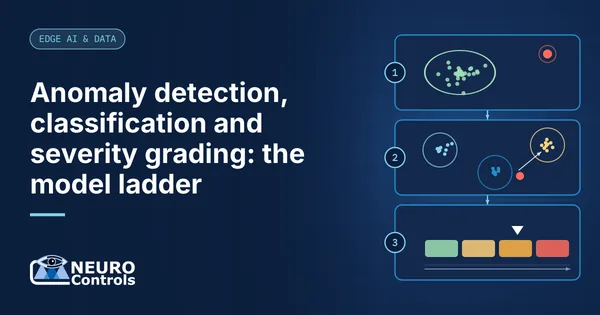
Is it abnormal, what is it, how bad is it? Three model types answer three different questions and need very different data. How to climb the ladder in order.
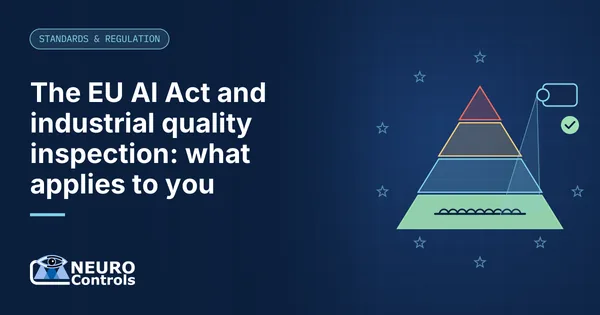
Most AI for weld, surface or acoustic quality inspection is not high-risk under the EU AI Act, but some duties already apply. How to classify your system, and the dates after the 2026 Digital Omnibus.
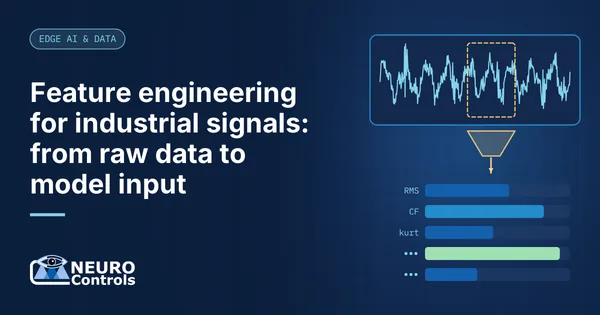
How to turn raw vibration, sound and thermal signals into features a model can use: physics first, then time-domain, spectral and envelope features, then validation.
The four bearing fault frequencies, their formulas, a worked example on a 6205 deep groove ball bearing, and what slip, sidebands and envelopes do to them.
Edge AI in manufacturing means evaluating sensor data with trained models at the machine. What it is used for, what hardware it needs and where projects fail.
How a vibration time signal becomes a spectrum: sample rate, FFT resolution, windows, averaging, units, and the mistakes that make a spectrum lie.
Next step
Write to us and we pass your question to the author.