

Short answer
The digital product passport under ESPR is a product-specific digital record, linked to a unique identifier on the product, that carries compliance, sustainability and safety information. Regulation (EU) 2024/1781 makes it mandatory for every product group that receives ecodesign rules, with steel, aluminium, textiles, tyres, furniture and mattresses prioritised. Batteries come first through their own regulation from 18 February 2027, but ESPR extends the idea across the economy.
Key takeaways
- ESPR entered into force on 18 July 2024 and replaces the Ecodesign Directive; the passport itself becomes mandatory product group by product group through delegated acts.
- The Commission's working plan of 16 April 2025 states that every product with ecodesign measures will have a digital product passport, unless an equivalent system such as EPREL exists.
- Iron and steel are scheduled first in 2026, followed by aluminium, textiles and tyres in 2027, furniture in 2028 and mattresses in 2029, according to the indicative plan.
- A passport must be linked through a data carrier to a persistent unique product identifier, built on open interoperable standards and kept available for at least the product's expected lifetime.
- The Commission's passport registry, which stores at least the unique identifiers, went live on 20 July 2026 with a testing environment.
The digital product passport under ESPR is often discussed as if it were a battery topic. It is not. The battery passport is simply the first one with a fixed date. The Ecodesign for Sustainable Products Regulation turns the same idea into a general tool that will reach steel coils, aluminium profiles, clothing, tyres, furniture and, over time, many electrical products.
This article explains what Regulation (EU) 2024/1781 requires of a passport, which product groups are planned first, how the ESPR passport differs from the battery passport, and what manufacturers and their suppliers can prepare now. It reflects the state as of July 2026 and is not legal advice.
What the digital product passport is
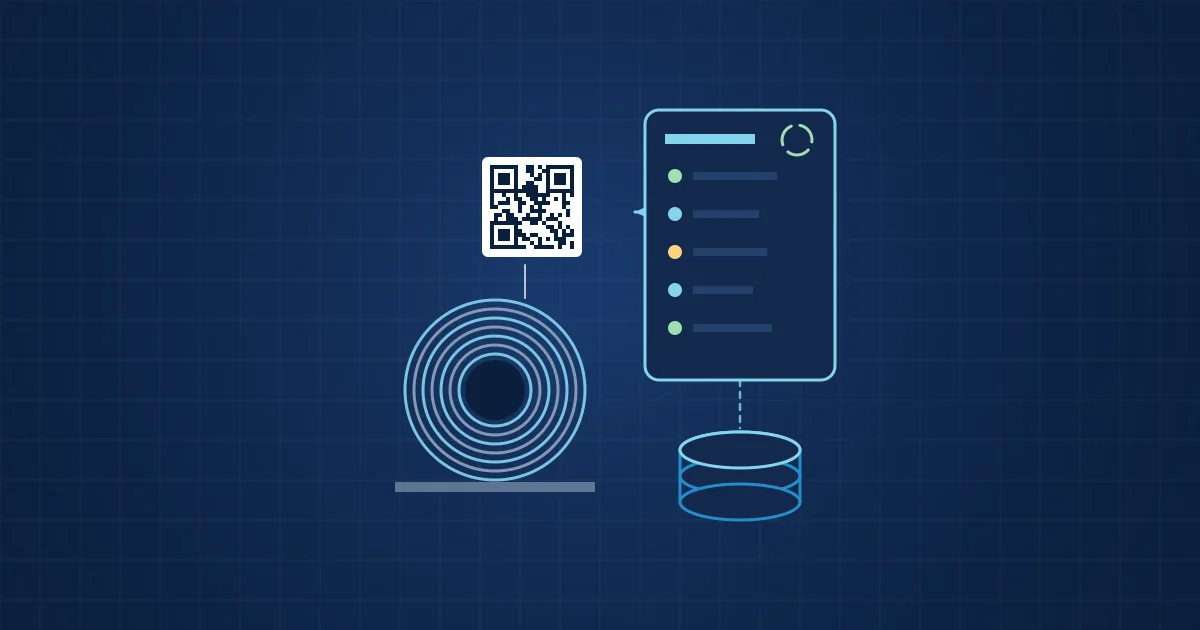
The digital product passport (DPP) is a set of product data, defined per product group, reachable through a data carrier on the product and linked to a unique product identifier.
The legal basis is Regulation (EU) 2024/1781, adopted on 13 June 2024. It entered into force on 18 July 2024 and replaced the Ecodesign Directive 2009/125/EC, which had covered energy-related products only. ESPR applies to almost all physical goods, with exceptions such as food, feed, medicinal products and certain aspects of vehicles that are regulated elsewhere.
ESPR itself does not switch on any passport. It sets the framework. Each product group receives its own delegated act, which defines the ecodesign requirements and the passport content for that group.
What every ESPR passport must do
Articles 9 to 11 of ESPR set requirements that apply to all passports, whatever the product.
Market access. Once a delegated act requires it, a product may only be placed on the market or put into service if a passport is available. Its data must be accurate, complete and up to date.
Granularity. The delegated act decides whether the passport exists at model, batch or item level. This single choice drives most of the data effort: a model-level passport is a datasheet; an item-level passport is a record per serial number.
Identifier and carrier. The passport must be connected through a data carrier, such as a QR code, to a persistent unique product identifier. The carrier must be physically present on the product, its packaging or its documentation. Annex III refers to the ISO/IEC 15459 series for identifiers and data carriers.
Open and interoperable. Passport data must be based on open standards, in an interoperable format, machine-readable, structured, searchable and transferable without vendor lock-in.
Access rights. Different actors, from customers and repairers to recyclers, market surveillance and customs, get access to different data, as defined per product group.
Storage and durability. The passport is stored by the economic operator or by a passport service provider, must remain available for at least the expected lifetime of the product, including after insolvency of the operator, and must ensure data authentication, reliability and integrity.
Personal data. Customer personal data may not be stored in the passport without explicit consent.
Which products come first
The Commission adopted the first Ecodesign for Sustainable Products and Energy Labelling Working Plan 2025-2030 on 16 April 2025. It calls the passport a key pillar of ESPR and states that every product for which ecodesign measures are adopted will have a passport, unless an equivalent system exists, such as the EPREL database for energy-labelled products.
The indicative timetable for adoption of measures:
| Product group | Type | Indicative adoption |
|---|---|---|
| Iron and steel | Intermediate product | 2026 |
| Aluminium | Intermediate product | 2027 |
| Textiles (apparel) | Final product | 2027 |
| Tyres | Final product | 2027 |
| Furniture | Final product | 2028 |
| Mattresses | Final product | 2029 |
| Repairability, including scoring | Horizontal measure | 2027 |
| Recycled content and recyclability of electrical and electronic equipment | Horizontal measure | 2029 |
Adoption is not the same as application. Each delegated act will include a transition period before its requirements apply. But the direction is clear, and for suppliers of steel and aluminium it is close.
The battery passport compared with the ESPR passport
The battery passport comes from a different law, the Batteries Regulation (EU) 2023/1542. Under Article 77, from 18 February 2027 each LMT battery, each industrial battery with a capacity above 2 kWh and each electric vehicle battery placed on the market or put into service must have an electronic record, the battery passport. ESPR links the two: the Commission's registry stores the unique identifiers for batteries as well.
| Aspect | Battery passport | ESPR passport |
|---|---|---|
| Legal basis | Regulation (EU) 2023/1542, Article 77 | Regulation (EU) 2024/1781, Articles 9 to 15 |
| Start | Fixed: 18 February 2027 | Per product group, set by delegated act |
| Products | LMT, industrial above 2 kWh, EV batteries | Any group with ecodesign measures |
| Level | Individual battery | Model, batch or item, defined per group |
| Content | Defined in Annex XIII of the Batteries Regulation | Selected per group from ESPR Annex III |
| Registry | Identifiers stored in the ESPR registry | Identifiers stored in the ESPR registry |
Our EU battery passport guide explains the battery side in detail.
The registry and the standards
Article 13 of ESPR required the Commission to set up, by 19 July 2026, a registry that stores at least the unique identifiers and, for products entering the EU, the commodity code. Economic operators upload the data and receive a registration identifier in return.
The Commission launched the DPP registry together with a testing environment on 20 July 2026. According to a LexisNexis report on the launch, six of the eight harmonised standards being developed with CEN-CENELEC for the passport have been published. For IT teams, that means the plumbing is becoming concrete: identifiers, carriers, data exchange and access control are moving from discussion papers to specifications you can build against.
What manufacturers and suppliers can prepare now
- Map your products to the working plan. Identify which of your products, or your customers' products, fall into the priority groups, and follow the preparatory studies for them.
- Decide how you will identify items. If item- or batch-level passports are likely, you need persistent unique identifiers and a carrier that survives the product's life, and you need them in production, not in a spreadsheet afterwards.
- Locate the data. Compliance documents, material composition, substances of concern and supplier information often sit in different systems. Find out who owns each data point.
- Think about data quality. "Accurate, complete and up to date" is a legal requirement. Data that comes from measurements should be traceable to how and when it was measured.
- Plan for integrity and security. Passport data must be authenticated and protected against manipulation. The same discipline applies to connected devices under the Cyber Resilience Act.
- Choose a hosting model. Store passports yourself or use a passport service provider, and plan for availability over the product's whole lifetime.
Where process data fits
ESPR passports are mainly about product information: compliance, composition, use and end of life. Production process data is not a general ESPR requirement. Yet for some products, inline quality data is exactly the evidence behind statements about durability or performance.
Battery modules show where this goes. A weld that joins cells in a module is a quality-critical feature, and a record of how every weld was graded is the kind of item-level evidence a passport can point to. We discuss this in where weld quality data fits in the battery passport.
How NeuroControls approaches this
We work on the passport question from the production side. In the BMFTR-funded research project DIGIBATT360 (February 2026 to January 2029), coordinated by VARTA Storage with Fraunhofer IIS, Circulor, VRI and NeuroControls, the partners are extending the digital battery passport with a federated data space and AI-based analytics. Our published role is cognitive sensing and returned-goods analysis; within it, we are developing an inline edge node designed to grade every weld of a battery module, with the verdict designed to go into the module's battery passport. The project is listed on our research projects page and our battery industry page.
Our recording software keeps a versioned manifest, per-segment SHA-256 hashes and an append-only journal, and exports to open formats such as JSONL and CSV: the kind of provenance a passport will need from its data sources. Our data solutions page shows how measurement data becomes a traceable record. Our work on inline weld inspection in the e-LAS+ project is described in our look back at the e-LAS+ project.
Frequently asked questions
What is a digital product passport under ESPR?
It is a digital record for a product, defined per product group in delegated acts under Regulation (EU) 2024/1781. It is reached through a data carrier on the product and linked to a persistent unique product identifier. It carries information such as compliance documentation, material composition, substances of concern and guidance on use, repair and recycling, with access rights for different actors.
Which products will need a digital product passport?
Every product group for which ecodesign measures are adopted under ESPR, unless an equivalent system exists. The Commission's 2025-2030 working plan prioritises iron and steel (2026), aluminium, textiles and tyres (2027), furniture (2028) and mattresses (2029), plus horizontal measures on repairability and on electrical and electronic equipment. Batteries need a passport under their own regulation from 18 February 2027.
When does the digital product passport become mandatory?
There is no single date. ESPR entered into force on 18 July 2024, but a passport becomes mandatory for a product group only when its delegated act applies, after a transition period. The first measures in the working plan are scheduled for adoption from 2026. The battery passport, under a separate regulation, is mandatory from 18 February 2027.
What is the difference between the battery passport and the ESPR passport?
The battery passport comes from the Batteries Regulation (EU) 2023/1542 and applies from 18 February 2027 to LMT batteries, industrial batteries above 2 kWh and EV batteries, at individual battery level. The ESPR passport is a general framework whose content, level and start date are set per product group. Both use the Commission's registry for unique identifiers.
What is the EU digital product passport registry?
It is a central register run by the Commission, required by Article 13 of ESPR, that stores at least each product's unique identifiers and, for imports, the commodity code. Economic operators upload these data and receive a registration identifier. The passport data itself stays with the operator or its service provider. The registry was launched with a testing environment on 20 July 2026.
Sources and further reading
- Regulation (EU) 2024/1781 (Ecodesign for Sustainable Products Regulation), EUR-Lex
- Ecodesign for Sustainable Products and Energy Labelling Working Plan 2025-2030, COM(2025) 187
- Regulation (EU) 2023/1542 concerning batteries and waste batteries, EUR-Lex
- LexisNexis: Commission launches digital product passport registry under ecodesign regulation (21 July 2026)
- EU Transition Pathways: The Digital Product Passport Registry is now live (July 2026)
- Fraunhofer IIS (Supply Chain Services): DIGIBATT360, Digital Circular Economy for Batteries