DIGIBATT360: building a data space for the digital battery passport
DIGIBATT360 links production, field and supply chain data around the EU battery passport through a federated data space. The consortium, the data flows and our part in it.

Blog topic
Inline weld inspection, traceability and the EU battery passport in cell and module production.
9 articles
DIGIBATT360 links production, field and supply chain data around the EU battery passport through a federated data space. The consortium, the data flows and our part in it.
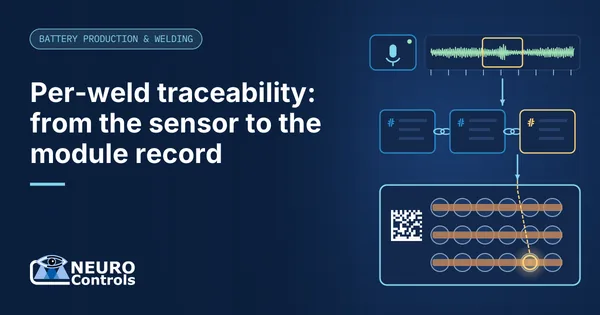
A weld grade is only useful if you can find it again and prove where it came from. How to build the chain from sensor sample to module record, step by step.
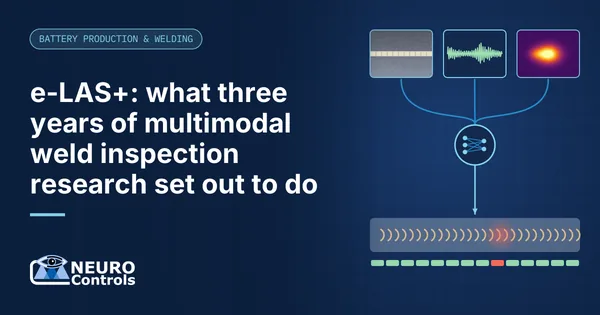
e-LAS+ had a project period of May 2023 to April 2026, according to the Fraunhofer IDMT project page. What the project on multimodal inline inspection of laser welds set out to do, and what we take forward.
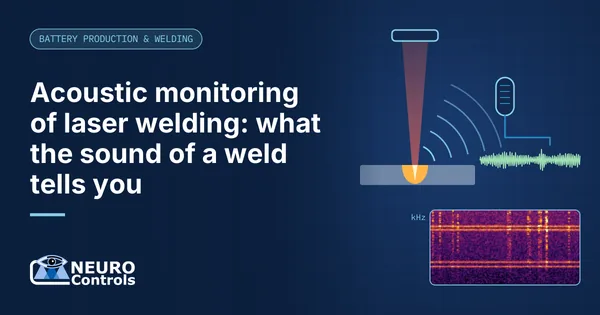
The keyhole and melt pool of a laser weld make sound. What airborne microphones and acoustic emission sensors pick up, what peer-reviewed studies show, and where the method stops.
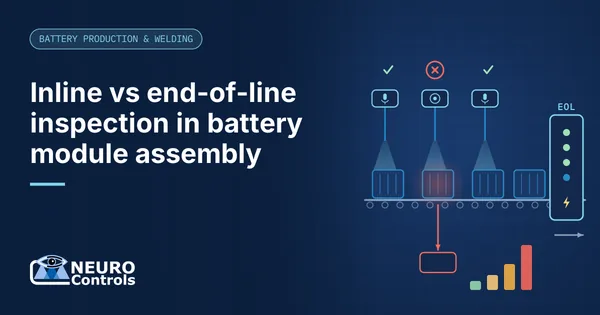
An end-of-line test proves a battery module works today. Inline inspection shows whether each joint was made right. Where each one belongs, and how to split the work.
The battery passport does not require weld quality data. Why that is, which passport fields welding still affects, and three sensible places to keep per-weld records.
Why spot welds on battery tabs fail cold or spit metal, why a resistance test often cannot tell the difference, and which electrical, mechanical and vibro-acoustic signals help.
Lack of fusion, piercing, porosity, brittle intermetallics: the defects that matter in battery cell laser welding, and what photodiodes, cameras, OCT and acoustics can see.
From 18 February 2027, EV, LMT and industrial batteries over 2 kWh need a digital passport. What Annex XIII asks you to record, who sees it, and how to get ready.
Next step
Write to us and we pass your question to the author.